Hot Fix: One Thing Only Vasily
(Because if Sean Connery can demand one ping only, you can demand one change only.)
No matter where you start, every archer eventually ends up fiddling with their bow. New bow, old bow, mid‑life crisis bow - doesn’t matter. At some point you’ll be standing there thinking, “It’s nearly tuned… but what if I just…” and that’s when the trouble starts. The orthodox advice is simple: change one thing at a time. But nobody ever explains why, and it turns out the reason is a lot more complicated than “because coach said so”.
Here are the three big reasons - GA style - why you should be a good wee Vasily and change one thing only.
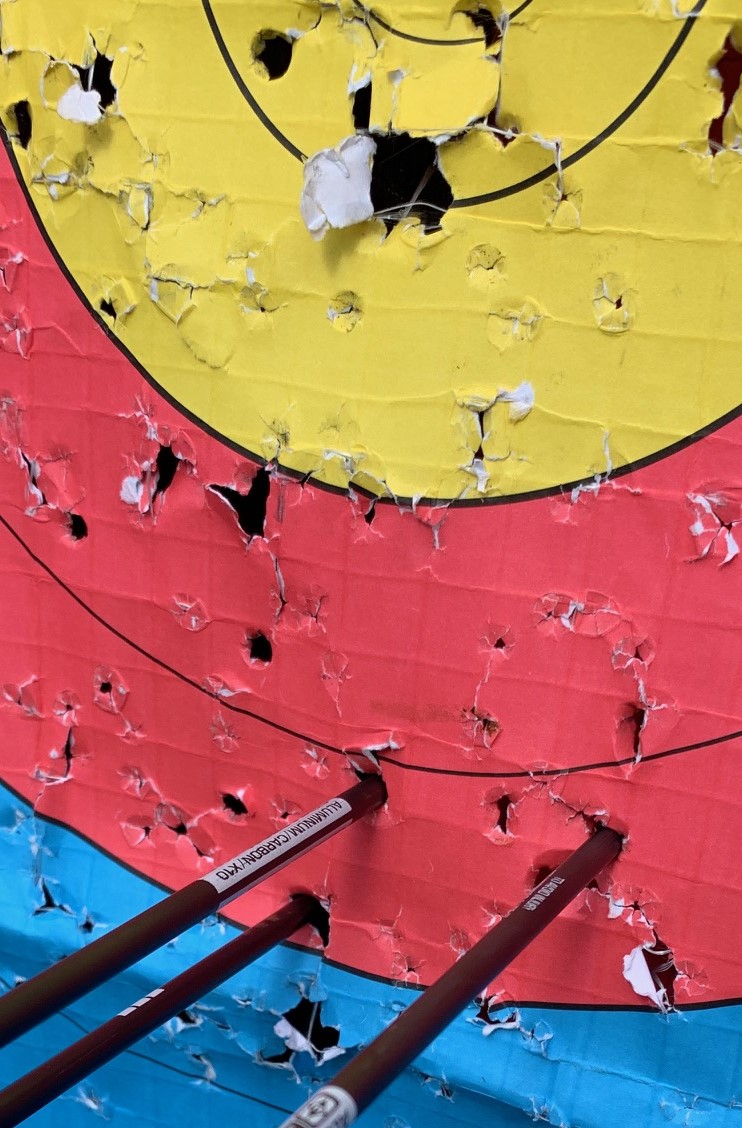
ok .. how did they get down there?
Cause and Effect
One change = one result. Move the sight down → arrows go up. Increase button pressure → arrows wander left (or right if you’re a leftie). Easy. Clean. Traceable.
Our editor says single changes are like tasting notes in a good single malt - you can pick out the peat, the honey, the “my god that’s smooth”. Multiple changes? That’s a blend. Because change two things at once and suddenly its complicated. Was it the anchor? The grip? The moon phase? You’ve created an interference pattern that would make a physicist cry.
Good luck figuring out what’s doing what.
Motor Learning* (aka The Tiny Coach on Your Shoulder)

Sweeeeeeet!
Your body has a tiny invisible coach perched on your shoulder. Coach is judging you. Coach decides whether a shot feels:
- “Sweet.”
or
- “Like pushing a shopping trolley with a wonky wheel.”
Every change you make sends a new signal to that coach. One change? Coach nods, adjusts, carries on. Three changes? Coach panics, screams, and throws your shot cycle into the bin.
If your shot process is stable, you can bolt on a stabiliser, add weight, tweak your grip, and your body just shrugs. If it’s not, the bow starts doing interpretive dance in your hand and you wonder why archery suddenly feels like piloting a helicopter in high winds.
Fewer changes = fewer signals = fewer meltdowns from your tiny coach.
Equipment Tuning Accuracy (Don’t Hide the Baseline)

All of John's data on clicker changes during the last 2 months
When tuning, you’re trying to build a map of what each adjustment does. If you change one thing and write down the result, congratulations: you've created data. If you change four things and the arrows move somewhere unexpected, you've created folklore. (Coaching advice should never start "Arrrrr, they do say ... ")**
Small, incremental changes let you:
- see the effect clearly
- write it down
- repeat it later
- fix things quickly when something goes wrong
In competition you might need to move your sight down and left - that’s fine, because you already know what each change does. But when tuning? Big dramatic overhauls just hide the baseline and leave you guessing.
The TL:DR version
Archery looks simple, right up until the moment you try to change something. Then it turns into experimental physics conducted by someone wearing a chest guard and carrying hex keys. So channel your inner Vasily:
- One change.
- One result.
- One thing only.
And there will be considerably less muttering of dark comments aimed at expensive carbon objects.
* * *
* Motor learning is a hugely influential area of study more officially called Dynamic Neuromuscular Stability. We're not going to get into this in any detail because Damn it Jim we're archers, not Neurologists!
** "Arrrrr, they do say Easton aluminums like a stiff button when the moon is waxing and the humidity is above seventy percent..."
File Image by Peter H from Pixabay
Discover more from Glasgow Archers
Subscribe to get the latest posts sent to your email.