
Target Panic: When Your Brain Decides Archery is a Terrible Idea

if there’s no spot I won’t panic.
You can shoot a six-arrow group at 70 metres that a Korean would find acceptable. You can explain dynamic spine, tiller and nock travel to bewildered beginners who only wanted to know did the fletching colour matter. Half the club asks for your advice. And yet the second a scoring face appears, your nervous system reacts like a Victorian lady confronting a mouse.
The sight pin approaches the gold. Your shoulder locks. Your draw hand forgets human evolution. And suddenly an arrow is heading towards the six ring at a speed normally associated with traffic wardens sniffing an expired meter.
Welcome to target panic: the unique archery condition where the only thing preventing you from shooting well is your own determination to shoot well.
The World’s Most Inefficient Safety Mechanism
The cruel thing about target panic is that it doesn’t happen because you’re bad. In fact, it usually happens because you’ve shot a lot. Your brain is an extraordinary pattern-recognition machine. After enough arrows it notices something. Every time the sight settles on that gold circle, something dramatic happens.
The bow explodes into motion. The string whips a projectile away at speed. Muscles spasm. Noise happens.
Your subconscious eventually concludes that placing the sight in the gold appears to be the first stage of a deeply stressful event. And being a helpful little Health and Safety officer, it intervenes. Unfortunately, your subconscious knows absolutely nothing about archery. And like most club committees, it means well but lacks key technical knowledge. Instead of helping, it starts making executive decisions.
The Two Flavours of Misery
Target panic generally arrives in one of two forms:
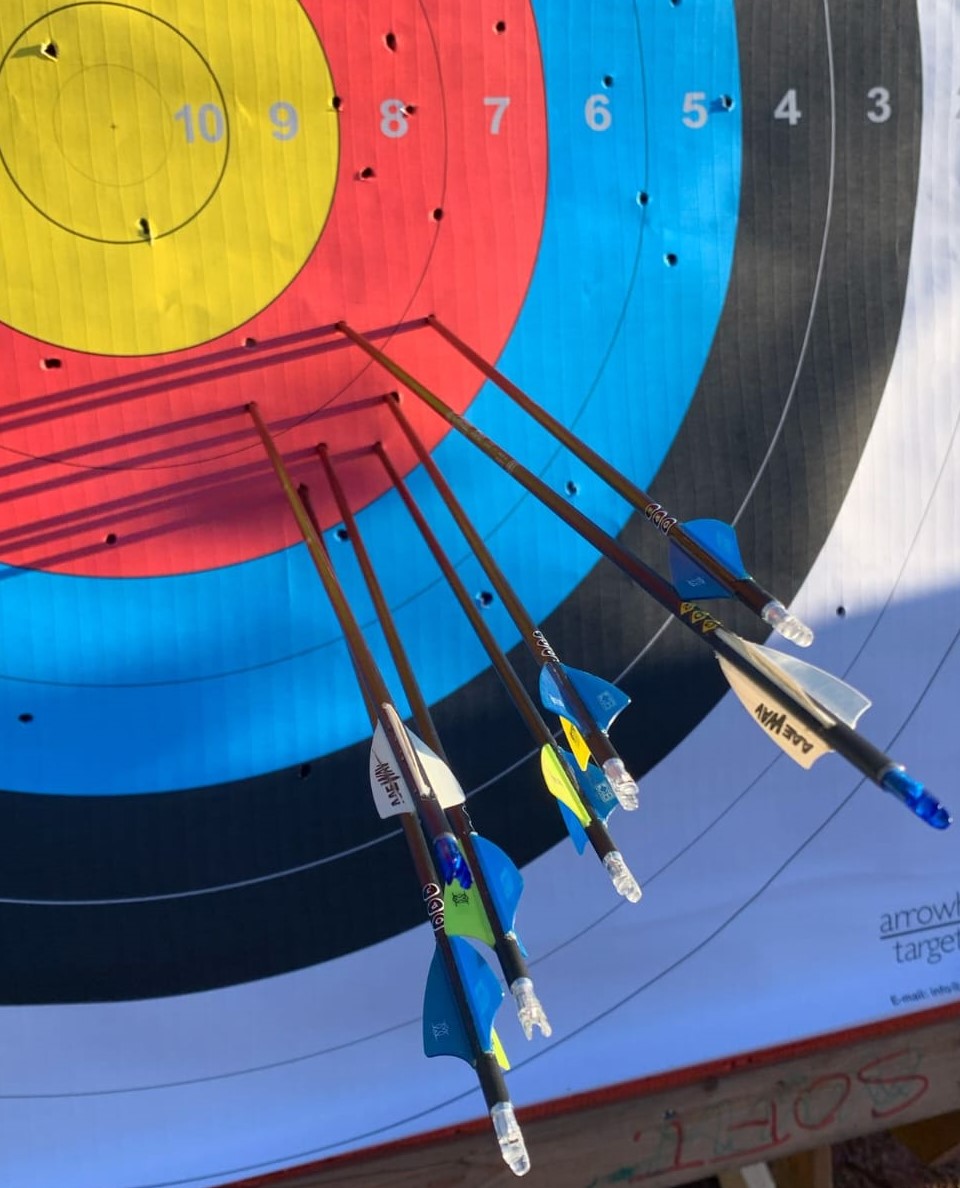
You do know the gold is a little higher and to the left?
The Snap Shot: The sight touches gold and your fingers immediately launch the arrow. Not a moment later. Not after proper execution. Immediately. The conscious part of your brain is still processing visual information while the arrow is already halfway to Falkirk. You are no longer aiming. You are simply ambushing the target.
Compound archers call it punching. Recurve archers call it collapsing/flinching or they just have a bout of Tourettes on the subject.
Most coaches just exhale slowly and say “Ah” already mentally rescheduling next month’s sessions.
The Freeze: This is arguably worse. The sight floats happily around the target but refuses to enter the middle. You can get close. You can get very close. But the final movement into gold feels about as achievable as parallel parking a ferry. The more you try to force it, the worse it becomes. Eventually your shoulders begin filing workplace grievances and you have to come down pretending that was your plan all along.
It wasn’t. Everyone knows it wasn’t.
The Shiny Solution That Isn’t
When target panic appears, archers immediately begin an ancient ritual. They blame the equipment. A stabiliser gets replaced. A sight gets upgraded. Someone purchases carbon components containing substantially more carbon than the previous carbon components. At 2am, an archer sits illuminated only by the glow of an online shop and convinces themselves that a new £400 accessory is the missing piece of the puzzle.
It is not.
Target panic is a psychological problem. Buying a new bow to fix it is like buying a faster car because you keep stalling at roundabouts. The vehicle is innocent. The driver is currently having a moment.
So How Do You Fix It?
The answer is frustrating because it is neither expensive nor exciting. You must convince your brain that aiming and shooting are separate events. At the moment your subconscious thinks they are the same thing. We need to teach it otherwise. For many archers, these drills have helped:
Blank Boss Shooting: Stand close to a blank boss. No face. No score. No gold.
Just draw, anchor, execute and let the shot happen. Focus entirely on movement, expansion and feeling. For many target panic sufferers, the shot suddenly becomes effortless. Which is both encouraging and deeply insulting.
Hold and Come Down: Aim at the gold. Hold. Keep holding. Then come down without shooting. Do it again. And again. And again.
The goal is simple. You are teaching your brain that looking at the middle of the target does not automatically require an arrow to leave the bow. The gold is not a launch button. It is merely a circle. A surprisingly gorgeous circle, admittedly, but a circle nevertheless.

no gold … what a relief!
Change Colours: Break association with the gold of the WA face and shoot field faces. Somehow the white spot is less intimidating. (Fieldies can shoot target where the gold will be a nice change from that stressful, must hit spot)
Rebuild Surprise: For compound archers especially, a genuine surprise release can be transformative. A hinge or properly executed thumb release forces attention onto execution rather than timing. Keep that back tension throughout. The shot should emerge from continuous movement and pressure. Not from a panicking digit screaming “NOW!” and slapping the trigger like it’s trying to win a gameshow.
The Annoying Truth
The worst thing about target panic is that there isn’t a secret cure. There isn’t a magic stabiliser. There isn’t a mystical release aid hand-built by Tibetan Archery monks. There isn’t even a particularly clever trick. The cure is patience, repetition and rebuilding trust in your shot process. Which is deeply unfortunate. Because buying shiny things would have been much more fun.
In the end, target panic is a reminder that archery has never really been a battle against the target. It’s a battle against the strange organic computer living inside your skull. The target and the bow were innocent all along. The call is coming from inside the house.
Discover more from Glasgow Archers
Subscribe to get the latest posts sent to your email.


Well said. There is more disinformation circulating about target panic than information. This helps dilute the misinformation. I have been trying to get university science programs to study the phenomenon, without success. Maybe if you try there and others try around the globe, maybe one of them will take the hook and we can get actual studies done. Of course, if you want scientists to study something all you need is money, but unfortunately archery has cost me more money than I have ever made from it.