Parallel vs Barrelled Shafts
We do our best to be a practical guide for archers, beginners, and anyone who’s ever watched an arrow do something it definitely wasn’t supposed to. However, sometimes a subject, even though significant, isn't going to raise real interest because the underlying benefits and issues aren't easily absorbed. In that case, we go full chaos mode to get the facts over in a funny way .... and today's article has us bringing the BOOM! :o)
 Archery is a peaceful sport, or so we tell newcomers. You stand quietly, breathe deeply, and then launch a carbon-fibre projectile at 150 mph while hoping it doesn’t hit anything excessively hard or indeed miss. And when selecting those fletched, wooden frame killing machines, nothing divides archers quite like the eternal conundrum they rarely think about ..
Should you shoot parallel shafts or barrelled shafts?
That's a question you probably haven't considered till now .. but knowing archers, you're already starting to fret about it. Aren't you? To alleviate this fretting, lets get into the nitty gritty of Parallel vs Barrelled. However, we'll be doing it our way combining technical accuracy with the lived experience of a club that has seen more equipment “incidents” than a busy insurance assessor and hopefully enough laughs to cheer up a dude whose longbow has woodworm. Safe to shoot ...
Parallel Shafts - The Sturdy, Sensible, “Aye, They’ll Do” Brigade:
Parallel shafts like Eastons Parallel Pro's or Merlin's Alimax are the arrows you recommend to beginners, students, and anyone who has just discovered that archery is a hobby where you can accidentally spend £400 trying to fix a problem that was actually your elbow. Parallel means the shaft of the arrow has the same diameter from point end to nock end.
Why are they brilliant?
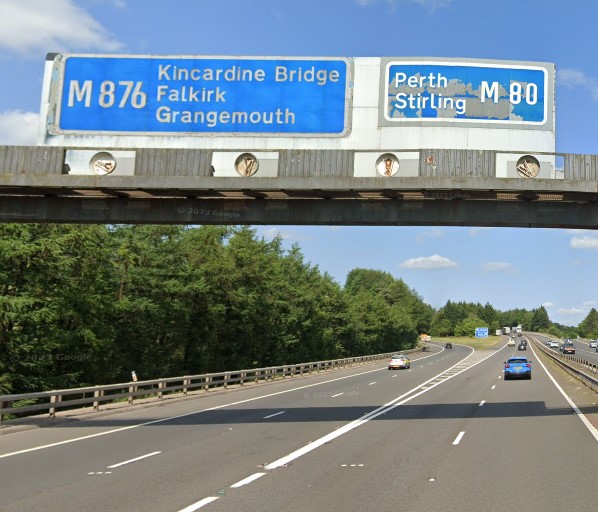
Why do my bare shafts keep heading to Falkirk?
- Parallel shafts are always the more affordable option. You can buy a dozen without needing to mortgage your limbs or sell pictures of your riser's tiller bolts on Only Fans.
- They are much easier to tune where they behave like their spine number says they should. There are rarely surprises and they almost never raise questions like "why is that bare shaft on its way to Falkirk” when tuning new arrows.
- They are pretty dang durable and are well suited to survive normal club use. (Normal club use excludes “I forgot to aim at the boss because there was a wasp”.)
- And everything fits together like it should. Points, nock pins, nocks — all standard. No hunting for components last seen during the Beijing Olympics.
Where They Struggle
- Clearance can be… educational. If your release is messy, parallel shafts will announce it to the entire field like a clipe in primary school.
- At distance, where they spend a lot of time in the air, they get pushed around by the wind and can generate a lot of drag. Shooting them at 70m can be like posting a letter second class and hoping for the best.
- They aren't the elite gear which some archers find irresistible. You won’t see them at the Olympics unless someone’s luggage went missing at Heathrow and the local archery shop only had parallel arrows in stock ... but they could get X10's for you in 7-10 days.
Barrelled Shafts: The High-Performance, High-Drama Thoroughbreds:
Barrelled shafts — X10s, ACEs, and their aerodynamic cousins — are engineered for precision, stability, and long-range smugness. They are also engineered to make your wallet reconsider its life choices. Here the shaft is narrower at the rear, thickening towards the middle then narrowing towards the pointy end.
Why They’re Amazing

to the olympics you go, pay the gatekeeper you must.
- Much better clearance as the tapered ends are slimmer than a parallel shaft’s tail, giving recurve shooters a cleaner pass. And fewer “why did that feel like a slap” moments.
- They generate less drag and they cut through wind like they’ve got a medal match to get to .. which they probably have.
- The very technical sounding Optimised Mass Distribution .. Which means in language even a trad archer on his 6th pint of real ale could understand .. Thicker in the middle, thinner at the ends — the aerodynamic equivalent of a well-balanced pint. Cheers!
- Elite performance. No argument from anyone on this. If you’re shooting 70m seriously, this is the kit. The barreled shaped X10's are the only arrow ever to have won Olympic gold since their release just in time for the 1996 Atlanta Olympics. That's 34 golds out of 34!
Where They Test Your Patience
- Expensive to the point that breaking one feels like losing a family pet. A beloved one. With lots of personality.
- Tuning-sensitive, they reward good form and punish nonsense. If your release is having a bad day, they’ll file a grievance with the board about your attitude and creation of a hostile work environment.
- The ends of the arrows can be fragile. The tapered sections don’t love impacts. (Nobody loves impacts, but they still happen. Usually on the boss John is shooting at!)
- Given their cost, few shops can carry big stocks which can mean the dreaded "out of stock". Especially if you need a spine that isn’t “the one everyone else shoots”.
Practical Takeaway
Parallel shafts are ideal for archers leaving beginner status, club archers, and anyone who wants arrows that won’t demand therapy after a windy session.
Barrelled shafts are ideal for competitive archers who want the best long-range performance and are prepared to invest in both the arrows and the tuning time — and who can emotionally handle the occasional “unexpected high speed equipment failure”.
Glasgow Archers Footnote (Article rated maximum chaos, still board-safe)
Hopefully this gives you a grounding in the benefits and issues with the shaft types which will help in selecting arrows. And finally, as we close up this article, here is an aide-mémoire we foreshadowed with the opening graphic ..
Parallel shaft: A pint glass. Straight sides. Honest. Predictable. If you drop it, it breaks cleanly with little trauma.
Barrelled shaft: A whisky barrel. Fat in the middle, tapered at the ends. If John drops it, it explodes into a tragedy.
Discover more from Glasgow Archers
Subscribe to get the latest posts sent to your email.