What Does it Mean to “Shoot Better”?
Steve Ruis sent us another article (for which we are really grateful) addressing, what is a good shot? One that is executed well or one that scores well. Take it away Coach ..
 A student I have been coaching online recently converted from Recurve Barebow to Olympic Recurve. He went to a competition that he had shot last year and stated that “I shot better Barebow recurve than I did with the Olympic recurve.” I asked him what “shot better” meant to him.
Same question to you reading this article .. What does “shooting better” mean to you? Even simpler, what does “a good shot” mean to you?
What is a Good Shot?I won’t draw this out. If you have to look at your target face, you have no clue as to what a good shot is. Imagine that you just shot a perfect shot, everything was perfect, physically and mentally, but before the arrow landed, a bird flew in its path and knocked it off course. (No real animals were harmed in this example. If the example makes you squeamish, maybe your arrow hit the nock end of an arrow buried in the X-ring and glanced off for a less than perfect score. Multi-faced target faces were invented because compound archers lost too many points that way.)

Shot at 70m, these were well shot arrows in very windy conditions.
Good shots do not always score well and bad shots can score very well indeed (mentally I consider this a worst case scenario, but that is a lesson for another day). My point is that the target face does not sort your good shots from your poor ones. Elite archers know they have shot a good shot as soon as the arrow clears the bow (actually shortly thereafter). Olympic recurve archers have follow throughs like clockwork. Once the string is loosed, the bow recoils and jumps out of the bow hand to be caught by a finger or other sling by most and then the bow rocks forward (because the long-rod creates a center of mass in front of the bow and below the pivot point, where your hand is).
I tell my Olympic recurve students that the shot isn’t over until your bow takes a bow (as in a theatrical bow). This aspect of the follow through is a consistency meter as the bow is responding to the forces upon it at the moment of the release. If the shot is an exact duplicate of the previous shot, the follow through should be the same. If it is not, you did something differently*. If the previous shot was perfect, this last shot was not as it was “different” from your perfect shot. Archery is referred to as a kinaesthetic sport, one in which “feel” plays a large role. You should learn what the feel of a good shot is and you, too, will know whether you have shot one when your bow takes its bow. Of course a gust of wind can lower the arrow score or one of those damned birds, you know.
What Does “I Shot Better” Mean?
Let’s say you shot in an event last year and you shot in it again this year and your score was 10 points better. Does that make it a “I shot better” round? You are probably hesitant to answer, "Heck, yeah!” at this point and that would mean you are catching on. Scores themselves are rarely telling.
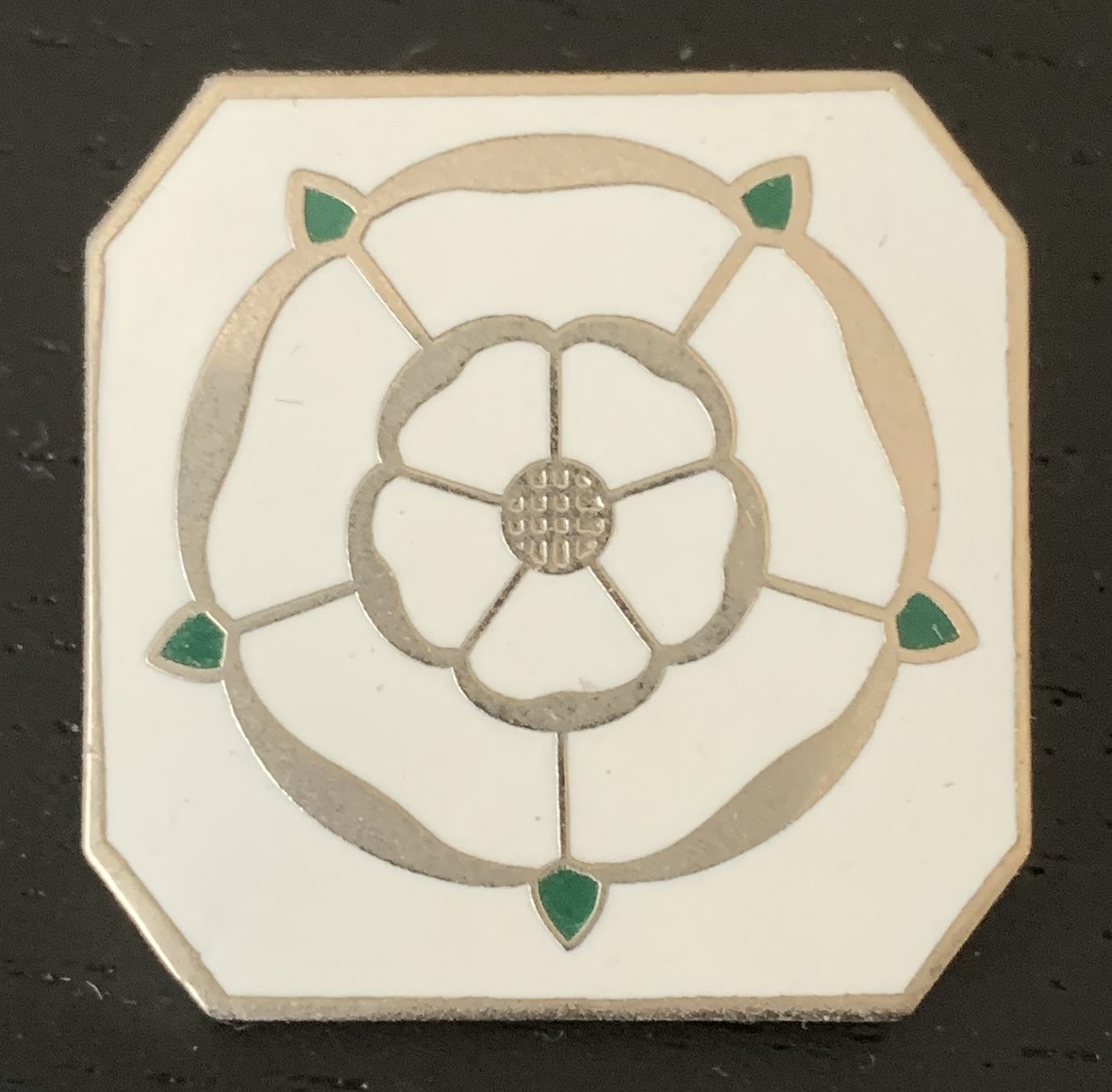
This White Rose was achieved by an archer who could barely stand with fatigue at the end of the 150 arrow shoot .. it holds a special place in his heart.
What if you had put in a lot of work on your shot over the last year, working with your county coach, and your practice round scores were 20-25 points higher than the score you shot in that event last year. Would you be happy? What if you caught a cold just before the competition and you barely finished the round before running out of energy? Would that score make you happy? (A “Heck, yeah!” is appropriate now.) How you shot on any particular day depends on the context (weather, health, etc.) and on what your expectations were.
I devoted a whole chapter in my book “Winning Archery” on how to create expectations for performances, which is too long to go through now. But if there is enough interest, I will try to condense all of that into a couple of posts. Let me know.
Steve
* Ps: If you tell others to hold their follow through until the arrow hits the target you are injecting irregularity into their shot routine. Shooting at a very short target, such as a short field target, the arrow is in the air for a small fraction of a second. For a long distance shot, the arrow may be in the air for over two seconds. The bow’s (theatrical) bow is regular, something you should attend to anyway because it is important (as a gauge of consistency) and takes the exact same amount of time for each shot, no matter how far.
* * *
Steve Ruis is the author of many books on coaching archery and maintains a blog for archery coaches at https://archerycoach.wordpress.com. He is the former editor of Archery Focus magazine.
Details on the White Rose award can be found on the Archery GB site
Discover more from Glasgow Archers
Subscribe to get the latest posts sent to your email.