Archery and Ladders
"Anyone can train to be a gladiator. What marks you out is having the mindset of a champion." Crixus/Manu Bennett
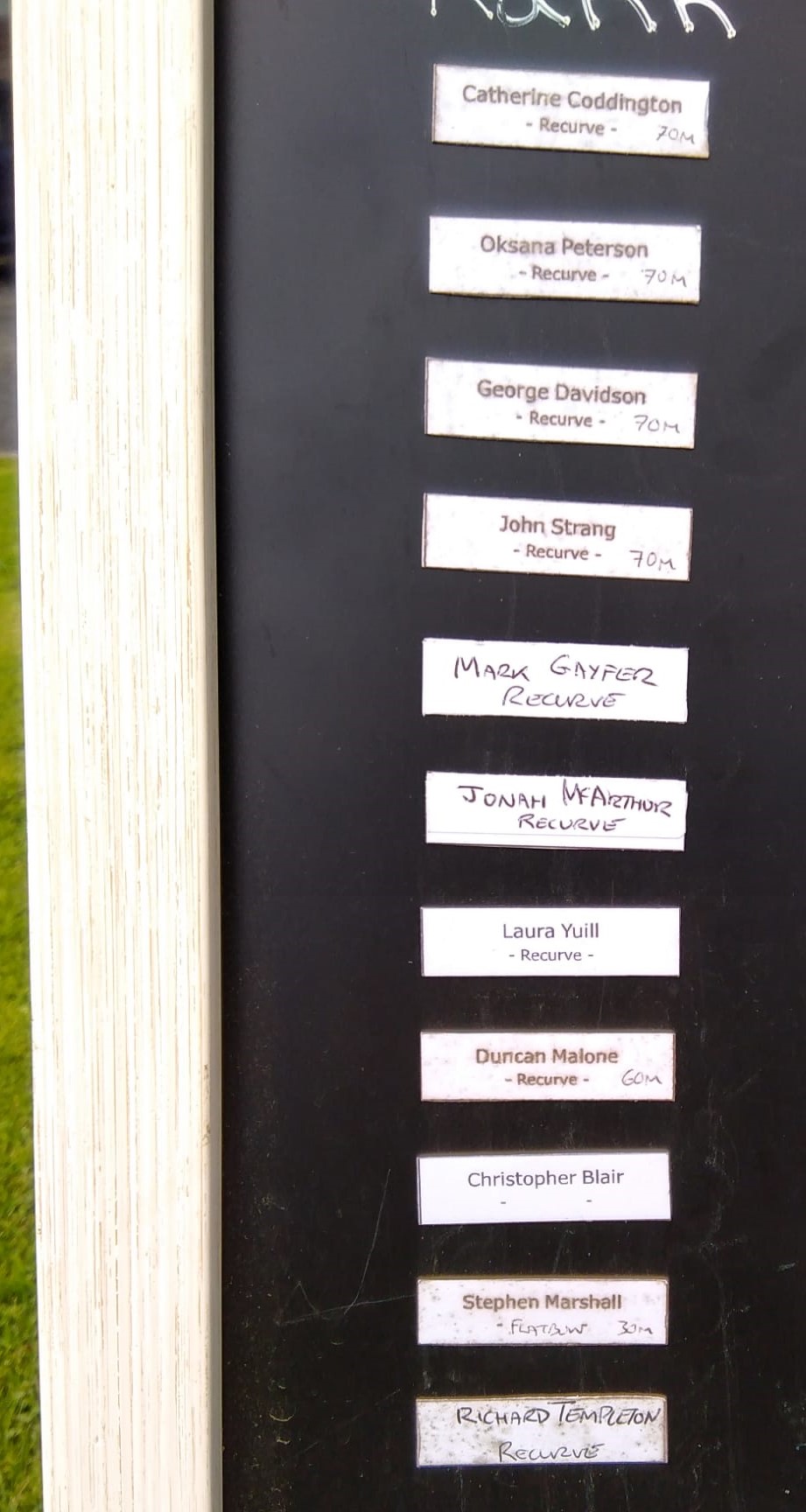
There's a bit of excitement set to kick off after Wednesday night at the club. John has restarted the club ladder competition, and the usual suspects are all scrabbling for their slots by shooting a ranking round. But what is the GA ladder competition, what's the ranking round for and why would it be a good idea for you to join in even as a complete noob? Let’s get into this microcosm of archery anguish, banter, competition and even improvement.
So, first the Ladder Competition itself. In a ladder competition, archers are ranked as if they were on the rungs of a ladder. The objective for an archer is to reach the top rung of the ladder and then hang onto it like their very lives* depended on it. The competition progresses with any archer able to challenge archers up to 2 slots above them on the ladder. If the lower-placed player wins the match, then the two players swap places on the ladder. There are some more rules, like challenges shouldn't be declined unless there's circumstances, but that's the gist.
The Ranking Round. This is how you find your slot on the ladder. Shoot and score a 30 arrow, 40cm face round (called a Bray 1) .. Hand in your score to John and he will find your place on the ladder - highest go at the top, lowest at the bottom, everyone placed in order of score in between.
How to Challenge. Here you can challenge either of the two archers directly above you. Slapping people with gauntlets is fine but just asking them for a match is also acceptable. Record this challenge with John. This is now a live challenge. You and your opponent should now arrange a session at the club to get it done. Behind Notre Dame Cathedral at dawn is only acceptable if you are a musketeer.
Now the Shootie part. This is a head-to-head shoot-off (H-2-H), exactly the same as you saw at the Olympics. Each archer shoot ends of 3 arrows together at the same time. Compare your score with your opponent. Highest point total for 3 arrows gains 2 points. Lowest nothing and ties mean you get 1 point each. First one to 6 points wins. If you are tied at 5-5, it’s a one arrow shoot-off, nearest the spider (the + that's dead centre of the face) wins. If it’s too close to call, you shot again. Any argument on scores, step away from your target, raise your hand, shout "JUDGE" and some opinionated sod will wander over and either cruelly dash your dreams OR raise you up unto victory.
There are few other procedural things where John will make up rules as required but that's pretty much it. We even have new scoreboards to show the scores of matches underway. But why enter the competition and what's the benefits?

Two archers enter, one archer leaves.
Apart from the excitement, anticipation and fun of shooting your H-2-H showdown, archery is all about managed stress. Shooting for a personal best (PB), shooting for chocolate, shooting for a medal, shooting for national team selection all have a common feature. Archery is somewhere between 75% and 90% mental and requires strength between the ears. This fun competition gets you managing your nerves and stress from the get-go. It also introduces you to proper scoring etiquette (DONT TOUCH THE ARROWS TILL SCORED!!!!!). It will improve your archery as it provides short term goals to achieve so helping you towards longer term goals like higher PB's, badges and classification awards. Obviously, it’s going to go all Hunger Games at the top of the ladder but lower down it can be a good bonding experience with a similar skilled archer. Not a great example but Geo and John do shoot together a lot even with all the "abuse" being exchanged. Fiendly** competition can drive two target partners on to be much better than either of them could have managed on their own without that challenge.
Wednesday night (18/9) is the last opportunity to get a ranking round shot and so be ranked (just shoot a Bray 1 = 30 arrows, 40cm face - scoresheets available). On Saturday, when the challenges start, you would need to start at the bottom and require to progress up through the entire table. Which thinking about it, might actually be an interesting journey for a newer archer. Running the table to find your natural place THEN the challenge of the climb would truly begin. So perhaps give the ladder competition a try … lower on the table will be fun for all. Top of the table, it’s going to make the Thunderdome look tame but by the time you get there, you will be ready!
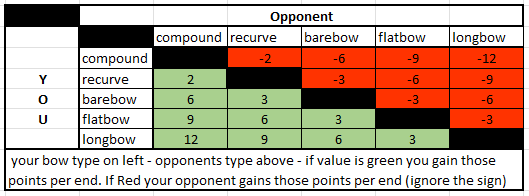 Update: After a few matches and more than a couple of conversations .. we're added a handicapping table to allow the different bow types to get some parity with each other. Based on AGB handicapping and classification tables, we hope this will smooth out the obvious issues if a longbowman challenged a compounder or a flat bow a recurver. Still a work in progress but these numbers do look to be pretty solid.
* * *
* that's just a joke .. its way more important than that! ;o)
** this was a typo in the draft and was supposed to read friendly .. but fiendly seems appropriate!
Discover more from Glasgow Archers
Subscribe to get the latest posts sent to your email.