
Why Arrow Speed makes 70m feel like Witchcraft
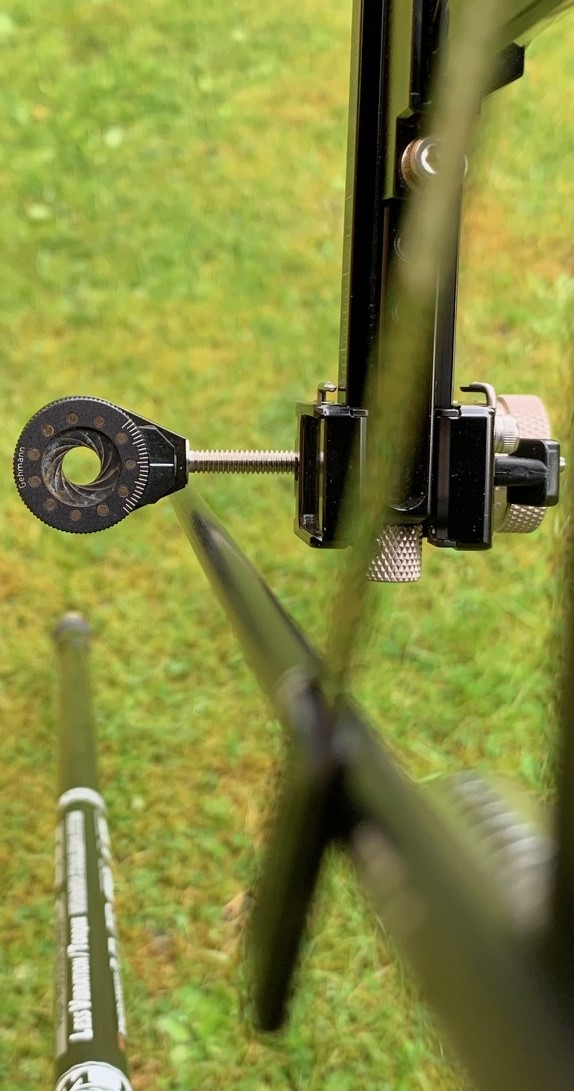
getting "YOU SHALL NOT PASS" vibes from my sight pin.
At some point in every recurve archer’s life, usually around the moment they first try 70 metres, they discover that their sight mark has opinions. Strong ones. One week it sits politely in the middle of the vertical bar. The next week it’s on its way to the bottom like it’s trying to escape. And every time, someone on the line offers the same sage wisdom: “Your arrows are a bit slow.” Which is technically true, but about as helpful as telling a visitor to Glasgow that Scottish rain is surprisingly wetter than normal rain. Some things you have to learn the hard way.
The truth is that 70m is where physics stops being a friendly background npc and becomes a full‑blown villain. Gravity, in particular, is the club member who never misses a session, never once says “good shot”, never helps set up the field or break it down. It simply drags your arrow downwards with the enthusiasm of a toddler pulling a tablecloth. The slower your arrow, the longer gravity gets to enjoy itself. A fast recurve arrow takes roughly a second to reach 70m. A slower one hangs around for a quarter‑second longer, which doesn’t sound like much until you realise that gravity uses that time to drop your arrow an extra three metres. Three metres is the difference between “comfortable sight mark” and “I’m now aiming half way up that tree and hoping for the best.”
This is why your sight block moves. The sight isn’t mystical; it be geometry bro. When your arrow drops, you must tilt the bow up more. When you tilt the bow up, to aim at the gold the sight block must go down. If your arrows are slow enough, the sight block goes down so far that you start to wonder whether Shibuya should include a shovel with every sight. Beginners, juniors, and wildly optimistic adults shooting 28lb all learn this the hard way. They come off the line saying things like “Is it supposed to be this low?” or “My sight pin is in the way of the arrow,” or the classic, “I think my bow hates me.” It might but in this case it’s just obeying physics with passive‑aggressive enthusiasm.
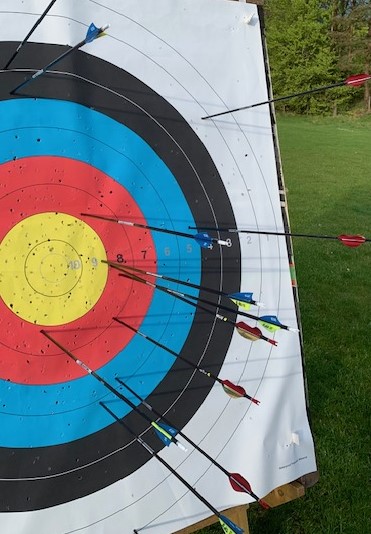
at 70m there can be a significant vertical dispersion from bows with lower poundages
Speed also affects forgiveness. A slow arrow spends more time in the air, which means more time for wind to shove it sideways, more time for your wobbly release to affect the arrows trajectory, and thus more time to allow the arrow to explore the full diameter of the target for .. cultural reasons? Even when shot well, slow setups produce tall, skinny groups at 70m. The trajectory is steep, so tiny changes in speed — caused by form inconsistency, fatigue, or the emotional damage caused by some robust banter — translate into big changes in impact height. Faster arrows flatten the arc, reduce the punishment, and generally make you feel like a competent archer again.
Your 70m sight mark is, in fact, a personality test. If it sits near the top of the bar, you’re shooting a fast, efficient setup and have probably never known the pain of “sight‑in‑the‑arrow‑path syndrome.” If it sits in the middle, you’re in the Goldilocks Zone: fast enough to be comfortable, slow enough to be sensible, and unlikely to cry during a full FITA. If it’s at the bottom, you are either a beginner, a junior, a brave adult shooting low poundage, or someone who insists their 600‑grain arrows “group better in the wind.” You are also one stiff breeze away from discovering that your sight pin and your arrow are now in a committed relationship. (Remember arrows should go under the sight pin, not through!)
If speed fixes so many problems, why don’t Olympic archers do a Clarkson* and chase maximum velocity? Because archery is a balancing act, not a drag race. Chasing too much speed means arrows get too light and twitchy, wind drift becomes unpredictable, and your bow becomes overpounded to the point your shoulders start writing complaint letters to AGB. Please note: physio bills are not included in your membership fee. Elite recurves aim for “fast enough”: a trajectory that’s flat enough to be forgiving, arrows heavy enough to behave in the wind, and a draw weight comfortable enough that the archer doesn’t collapse halfway through the round like a goth trapped outside on a sunny day.
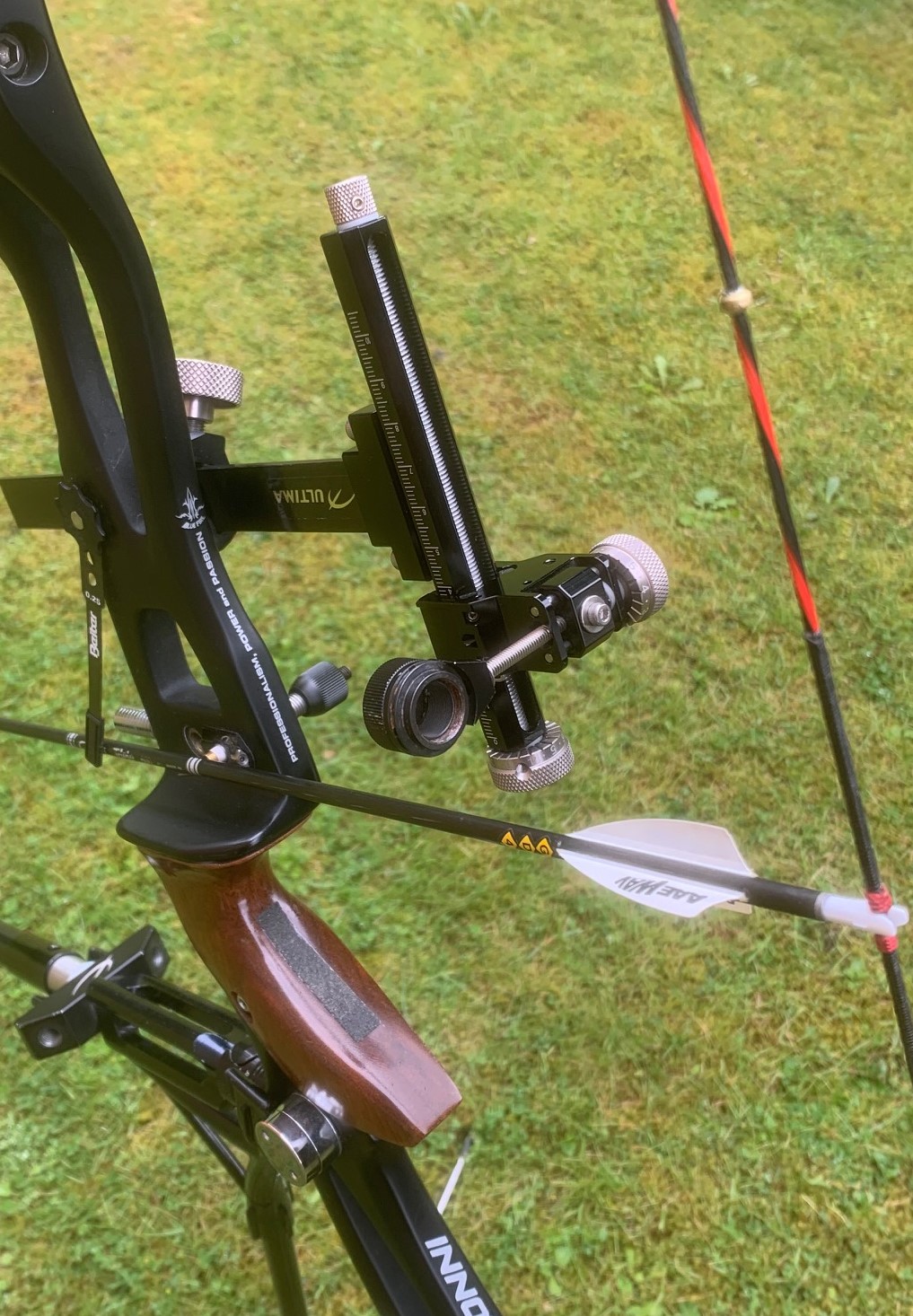
Its not illegal, honest mister!
So what does all this mean for you at 70m? It means your sight mark isn’t random. It’s telling you exactly how your kit is behaving. If it’s lower than last week, you’re tired, cold, or dehydrated. If it’s bottomed out and you still can’t reach, your bow is underpounded or your arrows are heavier than your coach’s sarcasm. If your groups are tall and skinny, your arrow speed is inconsistent, potentially because of a forward or clumsy release. And if your sight pin is in the way of the arrow, congratulations — you’ve reached a rite of passage. Time to crank the horizontal sight bar in towards the riser .. or in more desperate cases, take it out and reinsert upside down into the sight block on the string side. Yes, that does work! We'll write up an explanation of this voodoo soon.
In the end, arrow speed isn’t about bragging rights. It’s about trajectory, forgiveness, and whether your sight mark lives in a sensible postcode. Faster arrows give you a flatter arc and a happier sight bar. Slower arrows give you a steeper arc and a sudden interest in compound bows. Gravity remains undefeated. And your sight mark will always tell the truth, even when you’d rather it didn’t.
In summary: Gravity hates you. Your arrows are clipes**. Your sight mark is brutally honest. And 70m is where recurvers dreams go to be lightly toasted over an open fire.
* * *
* MAXIMUM POWER! MAXIMUM SPEED!
** "Clipe" (or clype) is Scottish slang refering to a tell-tale, snitch, or gossip, often used in schools to describe someone who "tells on" others to a teacher. It acts as both a noun (a person) and a verb (to clipe/tell tales). Example: "Don't be a wee clipe, ya clipe"
Discover more from Glasgow Archers
Subscribe to get the latest posts sent to your email.


1 Response
[…] experience is basically the same. Unless you’re shooting 28lb and suffering at seventy — but we covered that in a previous article, and we know your gym has already sent you a "missing you" card. Go see them […]