15 Seconds per Arrow. What Could Possibly go Wrong?

When your day job involves that level of pressure, the World Cup or even the Olympics probably feels less like a career-defining moment and more like a Tuesday. India has noticed, and it’s building its own pressure cooker.
The Archery Premier League (APL) is India’s first professional, franchise-based archery league, organised by the Archery Association of India with support from World Archery and World Archery Asia. World Archery says it was created partly to improve India’s Olympic prospects by giving domestic archers regular chances to compete alongside elite internationals. In other words .. high pressure training.
The theory is simple enough. If Korean archers benefit from a professional domestic environment, then creating something similar in India should accelerate the development of its own elite shooters. India’s Dhiraj Bommadevara has called the rules challenging, and says elements of the format have now crept into his practice. World No.1 Ella Gibson saw it as a continued improvement in archery’s accessibility saying “This league isn’t just for us competing today – it’s about shaping the future of archery. Anything that gets our sport in front of more people can inspire the next generation to pick up a bow.”
The Teams
There are six franchises, named after regional identities and historic warrior dynasties:
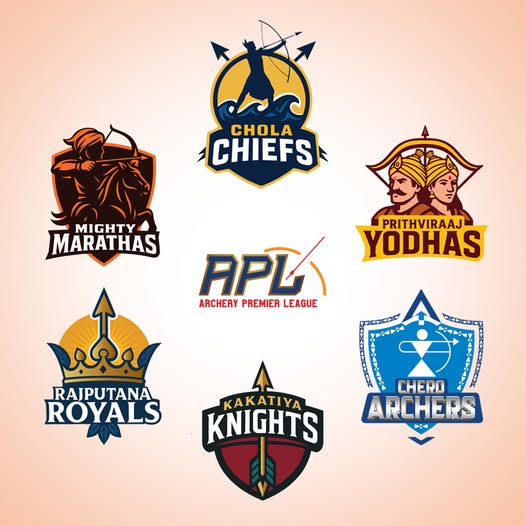
- Rajputana Royals (Rajasthan)
- Kakatiya Knights (Telangana)
- Prithviraaj Yodhas (Delhi)
- Chero Archers (Jharkhand)
- Mighty Marathas (Maharashtra)
- Chola Chiefs (Tamil Nadu)
Each roster has eight archers, four men and four women, picked in an eight-round draft from the top 36 Indian archers plus 12 overseas internationalists aka the furriners, including Mete Gazoz, Mike Schloesser and Ella Gibson. That’s 48 archers for six rosters of eight. Each franchise can only sign two overseas stars, with gender and bow type having to balance. Essentially, six owners held a fantasy archery draft, and somehow nobody fell out over who got first pick of Mike or Ella.
Seasons so Far
The inaugural 2025 season had its teething troubles including unseasonable rain (read trainee monsoon) in New Delhi that disrupted opening day, but it was well enough received that season two is now underway (at the time of publishing this article – Ed) in Hyderabad, running 8th to 18th October 2026.
Halfway through the competition, the standings were a scrum: four teams on six points after five matches, with Chero Archers on top by set difference despite a shoot-off defeat by the Marathas. By midweek the Knights and Marathas had broken clear on ten points, the Yodhas sat third on eight, and defending champions Rajputana Royals had clawed their way back from a three-match losing streak. At the bottom, Chola Chiefs finally ended their own slump on Thursday with a shoot-off win, Alejandra Usquiano shooting a perfect 80 out of 80 along the way.
The Format (where it gets freaky)
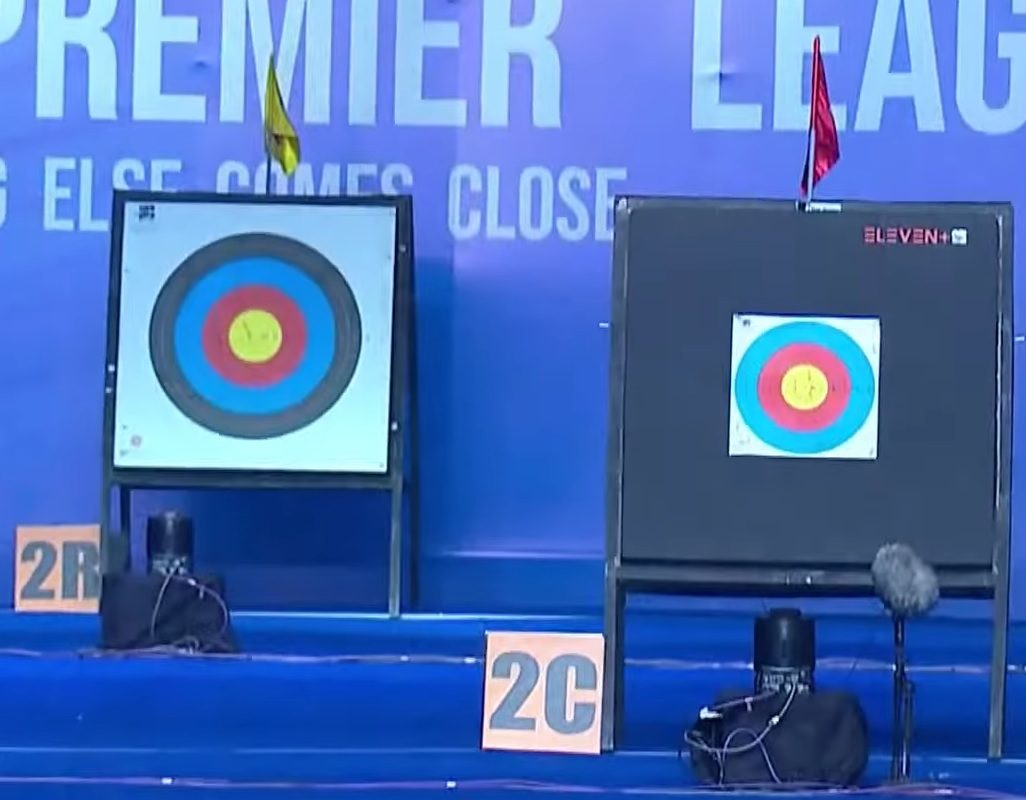
Recurves to the left of us .. Compounds to the right
Matches are mixed-team duels. Four archers per side, recurve and compound together, with each team getting a single 120 second clock for their eight arrows. Do the archery maths and that’s 15 seconds on average per arrow, down from the usual 20. It doesn’t sound like much until you remember archers can comfortably spend ten of those seconds having an existential crisis. It takes some archers longer than 15 seconds to nock an arrow! The teams alternate shots with the clock starting when the archer crosses the 1 meter line to shoot and stops once they are back behind that line.
Recurvers shoot 70m at a 122cm face and compounders shoot 50m at an 80cm inner face, so the bosses are staggered rather than in the classic straight line.
Scoring works like this:
- Sets: A set win is worth 2 points and a tie is worth 1. First team to equal or beat 5 points takes the match, so 5-1 would be a win.
- Shoot-off: If the teams trade sets 4-4, the match goes to a hit-or-miss shoot-off with one arrow per archer. Most “hits” out of the 4 shots from a team wins and it’s not a big spot to hit!
- Sudden death: If it’s still tied, each team nominates a single archer to shoot one arrow in a direct head to head duel until one hits and the other misses. Club archers will recognise the selection process immediately: whoever was too slow stepping off the line becomes the “volunteer”.
The six franchises meet twice over the competition, with three matches a night, for 30 round-robin matches over 10 days. The top four advance to the playoffs creating two semi-finals which leads us to the final all on day 11.
Note: That 120 second/8 arrow clock is hurting. On Thursday (day 7) the Marathas never got their eighth arrow away in either of the first two sets and the Royals ran out 6-2 winners, with Mete Gazoz sealing it shooting a 10 with barely a tick left. Casey Kaufhold’s take on the pressure? She just sees it as fun. Obviously “fun” means something different in Casey’s home town of Lancaster, Pennsylvania.
Why it matters
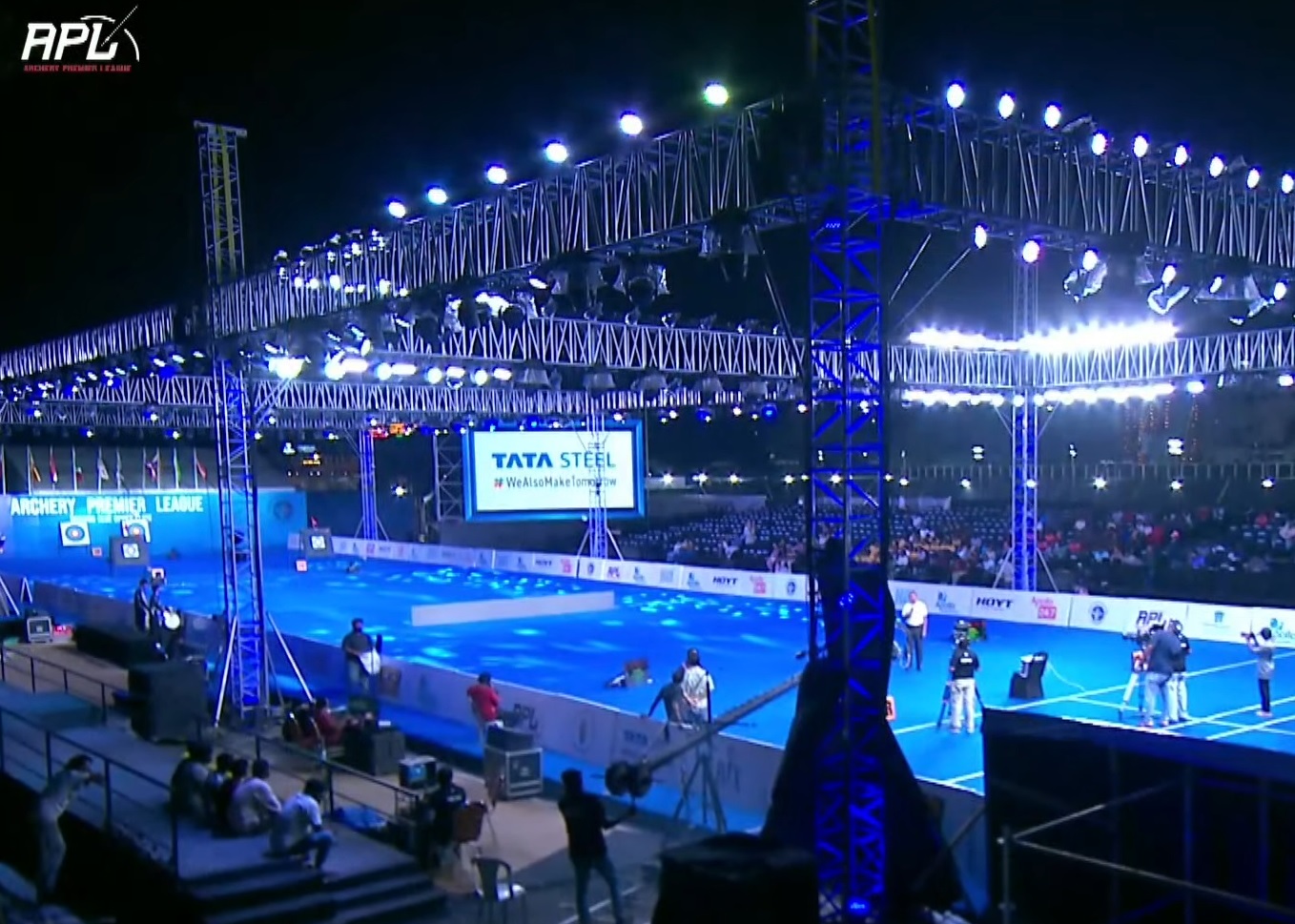
The sport needs spectators, personalities and pressure, and the APL is a deliberate attempt to manufacture all three without resorting to anything we’d regret in the morning. Whether the APL becomes the blueprint for something bigger or stays a gloriously chaotic experiment, it’s hard not to admire the ambition. It’s archery gone full Mad Max Thunderdome presentation. All that’s missing is a commentator bellowing “Two archers enter, one archer leaves” while a compounder quietly calculates wind drift to three decimal places.
Try it yourself
If, somewhere in Scotland, a field captain announced “15 seconds per arrow” .. an entire shooting detail is going to collectively forget how fingers work.
Make sure somebody records it.
For science. And the lols.
* * *
Full coverage of the event can be found on Prasar Bharati Sports
Highlights can be found on World ArcheryTV
League web site can be found here
Discover more from Glasgow Archers
Subscribe to get the latest posts sent to your email.