What Happens to Your Arrows After You Shoot Them?
Archers spend an extraordinary amount of time thinking about the front end of the shot. The kit, the form, the checklist, the ritual, the “don’t pluck, don’t collapse, don’t sneeze” internal monologue. We obsess over limbs, risers, arrows, tabs, release aids, stabilisers, and whatever new gadget someone on YouTube swears will add ten points to your Portsmouth. But once the arrow leaves the bow and begins its elegant (or chaotic) journey downrange, it eventually meets something solid. And that “something” — the boss — has far more influence on your day than most archers realise. Targets aren’t just paper faces pinned to a mystery slab. The things behind the paper face are made of engineered materials with quirks, strengths, weaknesses, and in some cases, a personal vendetta against your shoulders.
Before we look at the different types, it’s worth understanding the three big characteristics that define how a boss behaves.
Density is the first. Faster bows need denser materials to stop arrows reliably. Compounds, in particular, demand something with the stopping power of a small moon. Recurve and barebow archers can get away with softer materials, but compounds will happily punch through anything that isn’t built like a riot shield and even then its a bit iffy.
Durability is the second. A good boss needs to “heal” or at least not disintegrate after a few hundred shots. Some materials bounce back. Others slowly turn into a sad, fluffy crater that eats arrows and morale in equal measure.
And finally, Weather Resistance. Rain can turn certain bosses into soggy arrow lubricators, reducing friction and letting arrows bury themselves deep enough that you start wondering if you should have warmed up your rotator cuff.
With that in mind, let’s take a wander through the main types of targets you’ll meet in the wild.
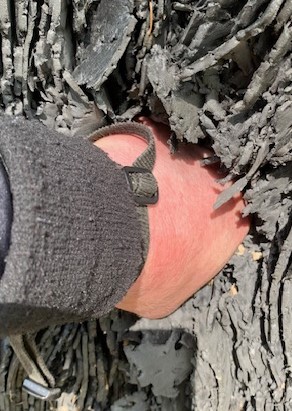
When you can shove your hand this deep, the boss might be a tad shot out
Layered Foam Bosses
These are the workhorses of most clubs: stacks of EPE or EVA foam sheets compressed together with ratchet straps and framed with wood. They shrug off rain reasonably well, though when they get wet internally, the foam becomes a slip‑n‑slide for arrows. They also take ages to dry, so if you shoot outdoors in Scotland, you’ll get used to pulling arrows from something that feels like a damp mattress.
They’re durable, affordable, and capable of taking thousands of shots before the layers start expelling foam confetti on every impact. If the banding loses tension, they fall apart like a badly made lasagne. For most clubs, they’re the default choice — reliable, predictable, and only occasionally responsible for a pass‑through that makes you question if friction really exists.

Lovely shoulders you have there .. would be a shame if anything happened to them.
Danage Bosses
The posh ones from Denmark. These are blocks of closed‑cell polyethylene foam arranged in a 3×3 grid inside a frame. The foam is usually XHD — Extra Heavy Duty — which is Scandinavian for “your arrows shall not pass”.
Danage of Scandinavia bosses are incredibly consistent. They stop arrows cleanly, they don’t care about the weather, and they last forever. This is why every international event uses them. They’re the Volvo of targets: safe, reliable, and built to survive a direct hit from a compound bow travelling at speeds normally reserved for Formula One race tracks.
The downside is the cost. Buying a Danage boss is the kind of financial decision that makes club treasurers stare into the middle distance. And pulling arrows from them is a workout. After a long session, you’ll feel like you’ve been wrestling a polite but immovable Scandinavian bouncer. Pulling a couple of hundred arrows from a Danage at a competition is going to leave you sore, strained and with a hatred of all things Scandinavian ... except ABBA obviously.

This had BETTER be a 3D model otherwise sod etiquette .. I'm running!
3D Models
UK law says you can’t shoot mammals, birds, or fish. It says nothing about shooting foam mammals, birds, or fish, which is how we ended up with 3D courses.
These targets are made of polyurethane foam with a realistic texture and a price tag that makes you wonder if the deer comes with a mortgage. They’re durable and weatherproof, but once they start getting chewed up, they deteriorate quickly. Larger models have replaceable kill zones, which is helpful, though your wallet may disagree.
The real challenge is arrow extraction. Polyurethane grips arrows like a Scotsman grips a high‑yield ISA. This is allegedly why the AroJac was invented — allegedly so lady archers didn’t need a bloke on hand to pull their arrows from the foam. Allegedly. We would never imply our women aren’t strong enough; we’ve seen what happens when you do, and we enjoy having intact limbs.
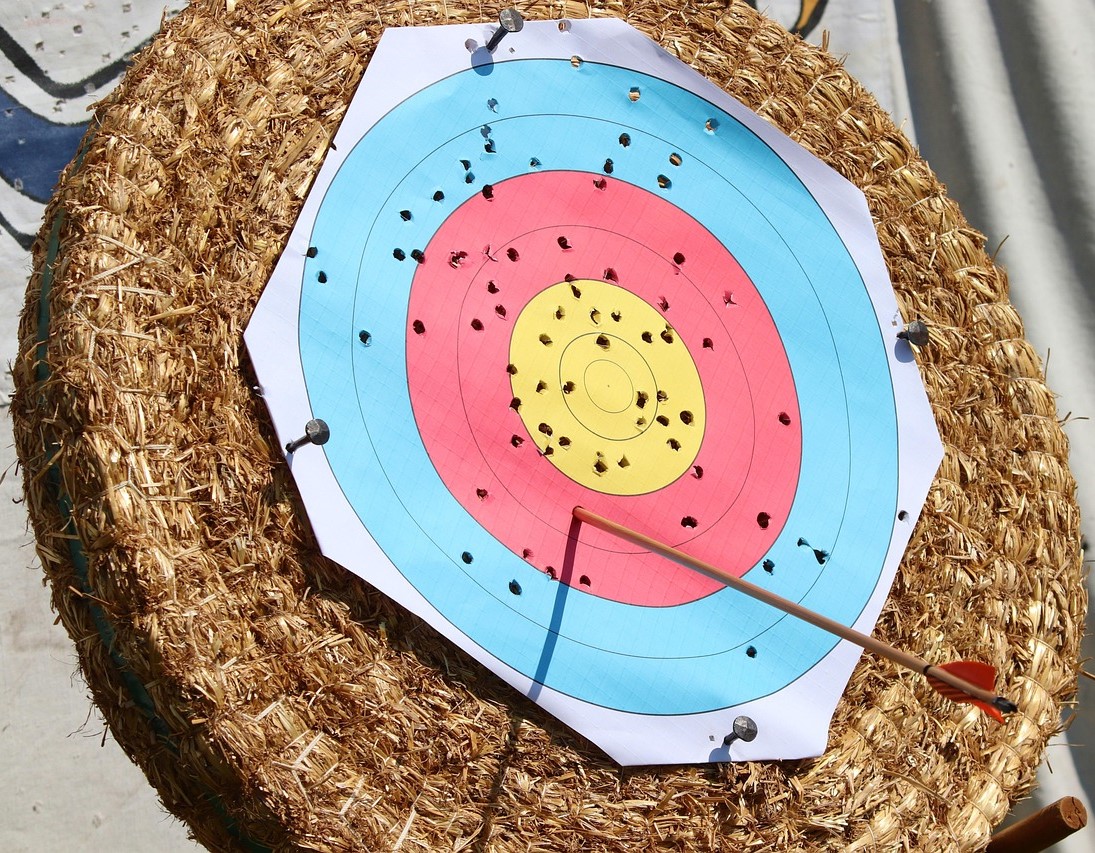 Compressed Straw Bosses
The traditionalists’ favourite. These are spirals of tightly bound straw stitched into a circular mat. Damp, they smell like a farm, which some archers find nostalgic and others find suspicious.
Straw bosses soak up water like a sponge, so in wet weather they become heavy, soft, and slightly tragic. When new, they’re rock‑hard and often require arrow lube to get your shafts back out. Over time, the centre softens till it has all the stopping power of a blancmange.
Supply is at the mercy of the UK weather. A few years ago, a poor straw harvest meant bosses had to be imported from Italy. Italian manufacturers use resin — lots of resin. Compound arrows travelling at 300+ fps friction melted the resin on impact, which then re‑hardened around the shaft, effectively welding the arrows into the boss. Everyone laughed except the compound archers, who were now trying to wrestle their arrows free.

Bag Targets
A big resilient sack filled with synthetic fibres, rags, or whatever the club found in the cupboard. They’re excellent for stopping high‑speed arrows and are popular for field practice.
They’re not weatherproof, and over time the bag gets chewed up, especially if you’re grouping well. But the stuffing rarely needs replaced, and they’re cheap, portable, and surprisingly effective.
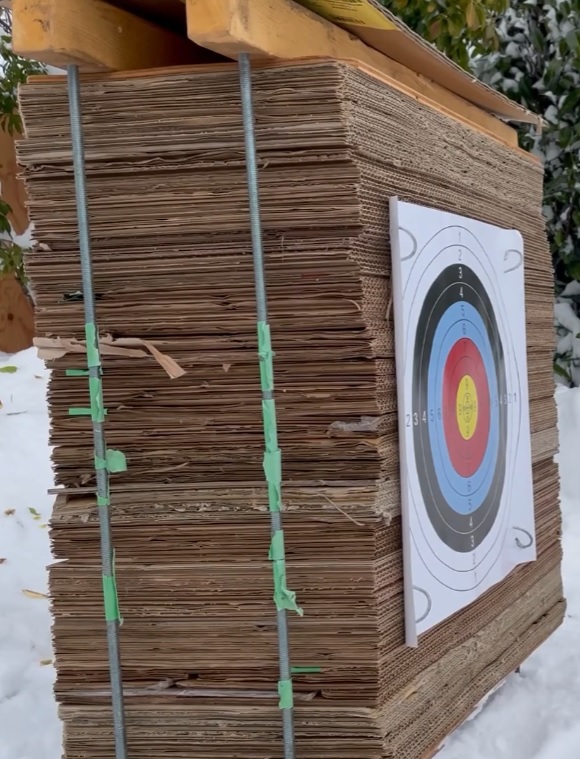 Home‑Made Targets
Wooden frame, layers of cardboard, a bit of optimism. They’re cheap, easy to build, and perfect if you’ve just bought X10s or a compound and now live on beans on toast.
They’re not durable, not weatherproof, and not pretty — but they work, and sometimes that’s enough. Just remember these are relying on compressed cardboard ... Works best with lower poundages. Pass throughs beware!
Nappies (Backstop Netting)
Compounds shoot arrows at speeds that make physics and bosses uncomfortable. A nappy is a heavy‑duty net hung behind the boss to catch pass‑throughs. Honestly, that's what they are called!
No other bow style needs one. Thus compounds now have training wheels and need nappies. The jokes write themselves. But they save arrows, save faces, and save awkward conversations with your landlord/owner of the field.
Final Thoughts
Different targets give different experiences. If you’re buying a home target or shooting at a competition with unfamiliar bosses, it’s worth knowing what you’re dealing with. Pulling arrows all day from a Danage boss is not the same as watching them pass straight through a shot‑out layered foam boss like it’s made of wet tissue. Performance is even more important for home shooting. At home, if the boss type might suffer pass throughs, don't put in front of anything that would react badly to that pass through! Insurance companies are not understanding of friction deficient accidents. So, everyone clear on bosses? Ok, you're good to pull those arrows.
* * *
Straw boss by Manfred Richter from Pixabay
Discover more from Glasgow Archers
Subscribe to get the latest posts sent to your email.