
Fletching Glue
A significant amount of time is spend by archers fletching and refletching arrows. Its like painting the Forth Rail Bridge or pushing a boulder up a mountain for eternity .. except more frustrating at times. One of the great question marks is what to use to stick fletch or vane to shaft. Arrows can accelerate at anywhere between 125 to 190g's on a reasonable poundage recurve and compound respectively so its a miracle they don't leave their fletches behind every shot! Then again, given how often fletches come off you'd think we were just giving the fletch a lick and trusting to the inherent stickiness of saliva! However, as you'd expect given we (that is, archers) have been doing this for 20,000 years, there are ways of getting fletch to stay attached to shaft. And as with EVERY SINGLE THING in archery, each has pros and cons. Lets look at the 3 the modern methods of applying feathery boi's to Easton product.
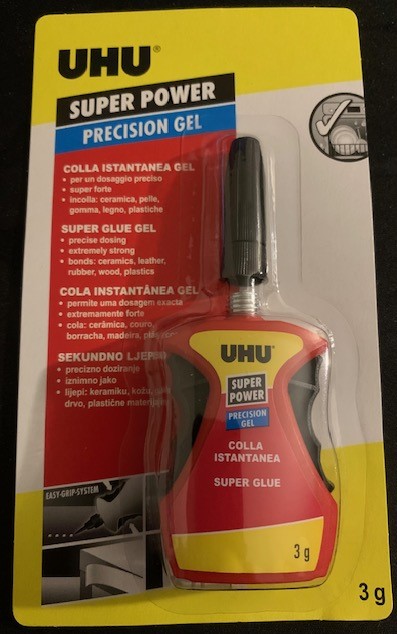
Original, mint, still in package cause our editor hates superglue
Cyanoacrylate (CA) Glues aka “Super Glue”: Superglue had its creation during WW2 .. accidentally. Bet that came as a surprise to someone! Today, this ubiquitous item is found being used in a huge number of applications .. Such as forensics, cosmetics and modeling hobbies in addition to its life saving fixing of broken things before your significant other/parents get home. It IS used in human and veterinary medicine and it's true it was used in Vietnam to reduce bleeding in wounded US soldiers while in transit to hospital. This sort of glue has proven ideal for arrows on olympic recurves and compound using small fletches especially where the arrow is going to be going at pretty high speed.
Super glue has some fantastic things to recommend it to archers. It cures quickly (10-30 seconds) meaning you can refletch an arrow in under 2 minutes then its ready to shoot. It goes tacky quickly making it great for jig-less or free handed repairs. It works on most shaft material be it carbon, ali's or even wrapped shafts. You don't need a lot of glue to make something solidly attached that makes it fantastic for small vanes.
On the negative side .. once cured, it can go pretty brittle which means in cold weather it can crack on hard impacts causing fletch loss. Its not fond of oily or polished/glossy surfaces which means you really need to give the surfaces a wipe with surgical alcohol or rough them up neither of which can be practical at times. Once the container is opened its going to go un-usable quite quickly so you may need to replace your glue regularly. Non-gel versions soak into wooden shafts reducing its effectiveness significantly. Finally, it can be extremely difficult to remove the glue from the shaft for refletching once a vane is damaged and needs replaced. Acetone can be used to aid in moving the glue but you do need to be careful otherwise you will damage the shaft.
Examples of specialist archery super glues are Bohning Blazer Bond and AAE Max Bond with Loctite Gel being a good general purpose brand.
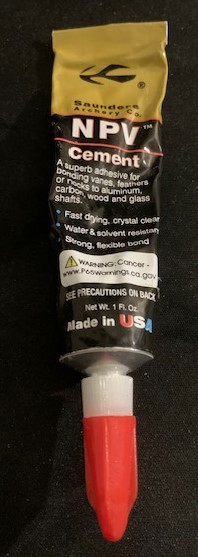
Stuck on you I've got this feeling down deep in my soul that I just can't lose
Rubber-Based Fletching Cements: These are the mirror image of the super glues. A more traditional type of general purpose glue for archers, they are much more flexible than the Cyanoacrylates. They are better for longer fletches such as feathers on woodies as it will flex with the feather rather than sheer off. As noted above, super glue has a tendency to soak into wood shafts which is something the rubber based glues do not. These glues take a while to go tacky/set which is indeed a disadvantage BUT it means you aren't on the clock when making adjustments. Finally they aren't brittle in cold weather meaning they wont just flake off in the balmy Scottish winter. A hugely big plus is the fact this glue is very easy to clean off a shaft for refletching.
On the con side, that slow cure time is a pain. You have to leave each vane in the jig for at least 10 minutes to go tacky and it takes 24 hours (48 hours preferred) before you can shoot them. They aren't always the best for high speed arrows, say on compounds, as the g forces on departing the bow can be ferocious. A jig is required with these types of glue as going tacky takes a while - no free handing a fix! And finally heat, especially when storing them in hot humid cupboards like ones containing boilers, or even a humid summer will have these all falling off at the same time as one GA archer found out.
This sort of glue is best for Wood arrows, feathers and set ups where durability > speed. Also for people who don't mind fletching an arrow or two a week. Examples of these glues are Saunders NPV and Bohning Platinum Fletch-Tite.
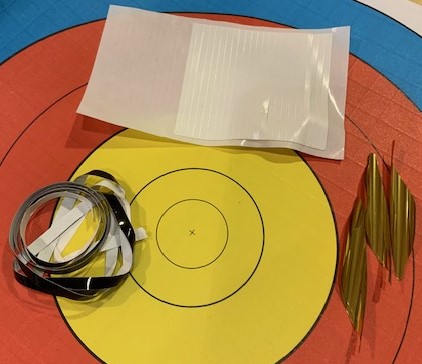
No Fuss No Muss No Cuss ... well, there may be some Cuss!
Tape (Double-Sided Fletching Tape): When is a fletching glue not a glue .. when its a sticky tape. Not quite sellotape, double sided fletching tape can be quite useful for archers shooting very light weight fletches like spin wings or similar. You draw lines on the shaft with a template, put the sticky strips onto the arrow lined up on the mark you just made, attach the fletch to the tape then wrap a single sided tape over the ends of the fletch to lock them down from lifting off. Recurve archers are very keen on these sorts of set ups. There's no mess, no fumes nor jig required. The bond is instant. You can repair an arrow in less than a minute. Easy to strip and re-do ... and its perfect for archers who habitually refletch. It seems like the perfect method for recurvers at least.
Here comes the "but" you were expecting .. Tape is not ideal for high speed set ups such as compound and the stickiness does not hold too well in the rain or heat. The surface prep needs be pretty throughout otherwise it will come apart. Shooting through the clicker will end a taped on fletch (See John for many many details). And finally the the base of the vane needs to be flat otherwise there wont be enough material on the sticky strip to get a good grip on.
As we said, target archers are keen on this method using such items as Bohning Fletching Tape or Bearpaw Tape. Spinwings or similar such vanes are best for tape.
So there you go. How to apply fletch to arrow with a certain degree of confidence its going to stay put for more than five minutes. Assuming you did everything right and the atmospherics weren't too humid or too cold and you left the glue to cure long enough and the glue hadn't perished and no maniac shoots through your new fletchings or you got a pass through stripping the fletches ... well, you get the idea!
Next time we will have a look at the medieval period and what medieval archers were boiling to get glues for fletching. (Animal lovers should brace themselves)
Discover more from Glasgow Archers
Subscribe to get the latest posts sent to your email.


1 Response
[…] couple of weeks ago we published an article on fletching glues including superglue, rubber based glue and fletching tape. But how did our archer ancestors get their feathers to stay stuck to their wooden or reed shafts? […]